Tuesday, March 1, 2011

Bread Pudding Recipe (by popular demand)

Sadly, today marks the first time in two years that Lees - a Vietnamese sandwich shop by UCI, raises its prices by 5¢. The food isn't terribly good, but they make fresh baguettes from scratch, all day. For one dollar, they'll hand you a still-crackling crusty baguette that burns your hands. More importantly, for the same price, you can buy TWO baguettes from the day before.

Woah. I know what you're thinking - you're thinking: "I thought this guy pretended to have standards!" It's true, I do. But I promise that when I buy day old bread, it's for one reason only: bread pudding. There is no easier, cheaper way to fit protein and carbs into a dozen students at a potluck. It's pretty much impossible to mess this up.
I learned that a lot of American's think of it as Southern food, but it turns out people have been sneaking day old bread into desserts to serve to unsuspecting guests for centuries - well, really, ever since the invention of sliced bread! Much more historical details here.

This recipe pairs well with "A Sunny Day in Glasgow".

Bread Pudding Template Recipe
(ie. Be sure to deviate from this recipe)
Ingredients
+ baguette, or other bread, that's too stale to eat
+ a few cups milk
+ a few eggs (1 egg per cup of milk)
+ 1 cup sugar for every 4 cups milk)
+ dash of salt
+ deep casserole dish
Preperation
Preheat Oven to 350F/177C/450K
Slice the bread up into a few pieces, with a few inches of thickness each. Use a hacksaw or axe if it's too stale. Keep the bread in the casserole dish while whisking/mixing together eggs, milk, sugar & salt until combined. It should be a pale yellow color.
You'll have to mess with the amount of the mixture, since it'll depend on your bread density and amount. Generally, I make enough mixture to reach a third of the height of the bread. At that point, I squish the bread into the mixture to help it soak up the liquid. If your bread is too stale, leave it for an hour. Add your dried fruit now too (I like raisins best).
Shove it in the oven for 30 minutes, or until browning on top.
Serving
By itself, or Maple syrup or Ice cream. You can't go wrong.

Friday, February 18, 2011

Instant Granola Recipe

Yes, this author is a little obsessed with oatmeal, though certainly the subject is not nearly exhausted. In fact, today, I am happy to share the latest in oatmeal technology, and my first original recipe.

For too long, humans have been plagued with the question: steel cut, or rolled oats? Though I cannot provide a definite answer, this recipe is sure to add a new dimension. Here it is, in a metafictionalized script.

(TL;DR: The recipe is recapitulated afterwards).

All the butter to eat you with (a skit)
Act One of One
Scene 1
(Wolf and Pig and in their apartment kitchen)

Wolf: (exhasperated)
Hurry up, pig! We're going to be late for class!
Pig: Now now, Wolf, I am reading a blog about instant granola.
Wolf: Now? We (look at the time) ... we're already late.
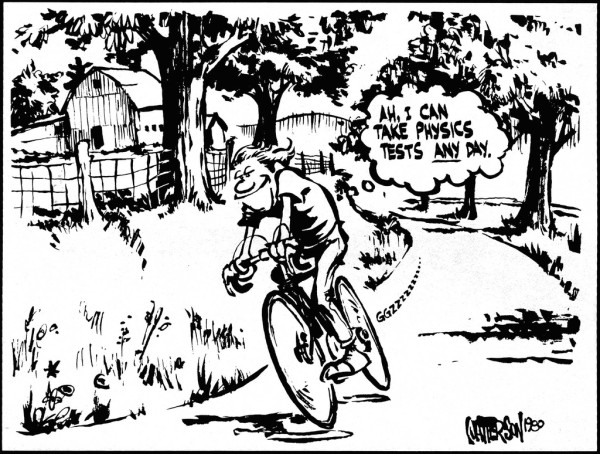
Pig: Right! -- so who cares if we miss the midterm -- we can take physics tests any day.
Wolf: You've got to be kidding me... (drops backpack)
Pig: Breakfast is an important meal! (throws 1/2 tbs butter into a heating pan while reading this blog) I can't do math if I'm hungry... (adds 1 cup of rolled oats, with dash of salt and sugar) Do you want some?
Wolf: Huh? Are you frying the oatmeal? It's not making that frying noise thing.
Pig: Yeah, that frying sound is actually from water evaporating from moist food. If you fry something dry, it doesn't make noise.
Wolf: Cool!
Pig: Yeah I learned that from this blog. Actually the entire recipe is given in play form.
Wolf: You would read that blog.
Pig: Stop complaining, I'm making you food. Put on some music, will you?

Wolf: How's this?
Pig: I like it. Who is it?
Wolf: It's this pretty cool band from Long Beach called Avi Buffalo. I saw them live in San Diego - at Sushi.
Pig: You don't like sushi.
Wolf: No - Sushi - its this venue that looks like a living room. It's pretty awesome.
Pig: (Dancing now, a little like Thome Yorke in his new song)
Wolf: Haha you look like Thome Yorke. I don't know how I feel about their new album.
Pig: Yeah me neither.
Wolf: So... what about that oatmeal?
Pig: oh SHIT I forgot it! (stirs the caramelized oatmeal) oh it got a little brown. Toasty. That's cool. Burnt butter is a carcinogen, no?
Wolf: I've personally looked into it, and I can't find any evidence or papers supporting that.
Pig: Thank goodness. (Pours oatmeal into a bowl) Smell this.
Wolf: That smells heavenly. And buttery.
Pig: (poors a little milk into the bowl. Loud hiss escapes the bowl as milk hits the hot oatmeal).

Instant Granola Recipe (serves one)
Ingredients
+ 1 cups rolled oats
+ dash of sugar (.5 tbs)
+ .5 tbs butter
+ dash of salt (less than 1 ts)
+ any kind of pot
Preperation
Preheat pan, add butter immediately (before it gets hot).Add the salt and granola,
ix together to coat the granola with the butter. As the pan gets hot, reduce the heat, and stir the granola every minute for 5 minutes. It should start browning slightly.
Add the sugar. The sugar will start caramelizing, so begin mixing immediately. It might get a little sticky and darker. At this point, the mixture is really hot, even if it isn't making any noise. You're done!
Serving
Poor directly into a bowl, and add some milk (or yogurt?). Some milk will steam off instantly, and the steady state temperature will be slightly warm - perfect for these chilly days.

Sunday, February 13, 2011

Broccoli Soup Love


My wooden spoon finds the walls of a Le Creuset dutch oven drum, as the Zipf's law white noise from the simmering chicken broth complement the blanched broccoli's intimate crunch in my mouth, and I am engulfed by the thousands of clapping hands emerging from butter-deep onion. This is my kitchen's Avant-garde concert tonight.

A similar open jam occurred last week, though the recipe was ad-lib. Neither the reception, nor the texture, was as smooth.

I am a firm believer in coincidences. As such, when I received a Cook's Illustrated magazine today with a feature on Broccoli Soup, I thanked the many Gods of Probability and immediately dove in and tried to make it again.

Cook's Illustrated, a cooking magazine known more for its television counterpart, "America's Test Kitchen", does an excellent job of finding classic and modern recipes, optimizing the hell out of them, and churning them back out 15 at a time, five times a year. Their methodology is nothing short of scientific (gastronomics?). Melissa was kind enough to gift me a subscription for the holidays.

Melissa is also to blame for my recent broccoli binge, for mentioning off hand that a poster at the Science/AAAS conference last Fall claimed that broccoli helped the brain heal. As this PhD webcomic clearly illustrates, we can safely conclude that eating a little more broccoli directly increases brain size. Despite listening to 4 years of Melissa's advice, only my heart seems to be growing. Happy Valentines Day - I love you Melissa!

Sunday, February 6, 2011

What is the garden?

The garden groundbreaking was yesterday, and I'm still overwhelmed by the amount of work that we accomplished. After breakfast and some speeches, about 200 UC Irvine students, staff and community members put together 35 beds, moved 10 tons of gravel and 5 tons of dirt. It was amazing to participate in a project that optimized itself. Each task group, like bed construction or dirt hauling, set the first derivatives of their respective equations to zero, and - on their own, without explicit leadership - became more efficient as the day went on. Yesterday was one of the happiest and most exciting day of my life.

This post isn't about the groundbreaking though.This post I want to dedicate to answering some basic questions about the garden. Questions that I wish we had addressed during the speeches yesterday. If you have other questions, let me know, and I will add them to this post.

What is the goal of the garden?
The primary goal of the garden is to provide UCI students an opportunity to learn about the food system through garden volunteering, workshops, and curriculum integration. Food production is NOT a priority. The garden is an extension of the classroom; it is not a farm.

Who gets to use the garden plots?
UCI already has a few plot-based gardens - they're very popular (Anthill Village Community Garden has a year long waitlist of over 100 people). We're not trying to compete - in fact, no single student will be alloted a single plot. There's no way we can meet the interest through plot rental.

Our garden will operate more like an urban farm - where the garden volunteers and coordinators have a global jurisdiction over all the plots. (See the last question for more information.)

Why a garden?
There are many reasons. Here are a few good ones. (1) We're the last UC without a student-run urban garden. (2) There's a lot of gardening interest at UCI - we have over 1000 hours of pledged gardening from the student body! (3) A garden can provide educational opportunities in three way - through passive exposure to the student body, and active participation in gardening or in workshops.

Why in Arroyo Vista Housing, on an old Volleyball Court?
Finding land for the garden was one of the hardest steps in establishing this project. All the land at UCI has been alloted for something since the early 90s. The Anteater Garden Initiative had virtually no choice in space. After months of negotiations, the former volleyball court turned construction storage was the ONLY choice offered by the administration.

We know that the Arroyo Vista Student Council voted for the garden to cover the south end of the Arroyo Vista field, and NOT the volleyball court. We were really happy to have the support of the AVSC, and we were ready to begin construction on the field. Unfortunately, Student Affairs and the Arroyo Vista Housing Office (Director Harvey) ignored the AVSC's vote, and offered the volley ball court as the only option.

The garden wants to maintain a positive relationship with the AV Residents and the Greek community, despite this conflict of interest.

How will the garden volunteering work?
Sign up at our website! Garden scheduling will be bi-quarterly (twice-a-quarter). After assessing every volunteer's availability, and hosting a couple of orientation events, we will have regular gardening hours a few times a week, coordinated by a garden commission volunteer coordinator. Throughout the quarter, all volunteers and volunteer coordinators will meet on a biweekly or monthly basis to address garden agenda.

Who is allowed to garden?
All UC Irvine Community Members registered as trained volunteers (training will be offered at the beginning of every biquarterly volunteering cycle.

Who decides what food is grown, and where the food goes?
This garden is student run and student funded. It makes the most sense for the garden volunteers to decide what is grown, and how the harvest will be used at the end of the season.


How can I get involved?
Sign your email up at our ASUCI website - www.asuci.uci.edu/garden
You'll shortly be contacted by a volunteer coordinator to evaluate your availability, and let you know when the next volunteer orientation will be. There are also a lot of internship and leadership opportunities through the Garden Commission - the ASUCI entity that is in charge of running the background work, logistics, funding, budgeting, purchasing, coordinating, organizing, etc. If you're interested in getting more involved in the leadership, shoot us an email! garden@asuci.uci.edu

Have another question? Put it in the comments, and I'll add it to this post!

Thursday, February 3, 2011

ASUCI Garden


I have a confession. For the last eighteen months, I have been working my butt off with five other undergraduates to establish the first ever, completely student run, education based, on campus food garden at UC Irvine.

Eighteen months ago, I halfheartedly proposed a new campaign to the Real Food Challenge at UCI - a student organization dedicated to increasing the procurement of environmentally friendly, socially responsible and economically viable food on campus through advocacy and education projects. The idea was simple: lets start a student run food garden that operates more like an extended classroom than a farm. The garden space would provide food education through volunteering opportunities, workshops and extension of university curriculum.

Alexandra Nagy - a good friend and fellow co-president of RFC@UCI, had suggested the same idea a few months before. So, we decided one day to walk into the office of the Director of Environmental and Campus Planning at UCI, and asked for a garden. He asked the most obvious question imaginable: how big do you want it to be? uh...well...we were really unprepared, and it was about at this point when I realized that this was going to be a longer project than I anticipated.

A group of five undergraduates began meeting weekly, and in no time, we had the support of hundreds of students, and several key faculty and administrators. In the Fall of last year, the Scholarship Opportunities Office helped me identify appropriate fellowships for which to apply, and then continued to provide essential feedback throughout the application process. In the end, I was selected as an alternate to the Strauss Fellowship Foundation.

Concurrent to the Strauss application process, we also applied for a grant from UCI's very own TGIF - the Green Initiative Fund, from whom we were granted over $30,000! I'm glad that I was able to use some funds from TGIF - which is student funded - to provide students with a new resource.

Finding land for the garden was also a lengthy bureaucratic nightmare worth noting - nearly all of the land at UCI has been planned for development, through the Long Term Development Plan established decades ago. In the beginning of September, we finally were able to settled on a quarter-acre plot of land in Arroyo Vista. This would not have been possible without the support from key administrators, including Vice Chancellor Dan Dooros and Director of the Student Center, and our advisor: Stacey Murren.

This weekend we are celebrating the groundbreaking of the garden. We plan to build nearly 50 raised beds in a day. We'll have free food, free tshirts, and plenty of work to do - all day! There will be painting, eating, planting, building and sweat. We expect upwards of 500 students to attend the event. I hope you can make it - more information is at this link.

I am graduating in the Spring, with a BS in Physics. It is heartwarming to see the campaign that I have worked diligently on for 18 months come to fruition, and I am overjoyed that I can leave behind a legacy at UCI and provide new opportunities to fellow students. Before June, I will help strengthen the foundation of the garden and do my best to guarantee its future success.

I must confess that this project is my love child - a bastard campaign that quickly grew beyond my expectations and took a lot of time from my academics and other interests. I've come to peace with this imbalance. Undertaking this project has only been rewarding an experience, and one from which I've learned more than I would have from any classroom. I encourage anyone with ambitious ideas to pursue them, for the sake of the experience. I am fully convinced that UC Irvine has more opportunities for undergraduates to pursue more cocurricular and extracurricular activities than even the most prestigious universities.

The garden would not have been possible without the encouragement and invaluable help of the following entities and people: The Scholarship Opportunities Office Counselors; ASUCI; TGIF; The Strauss Fellowship; Kevin Schlunegger; Megan Braun, Dan Dooros, Richard Demerjian; Sitara Nayudu; Logan Frick. Thanks to Linda Huang for designing our awesome UCI logo. The garden would have been downright impossible without the Anteater Garden Initiative: Alexandra Nagy, Alexandre Colavin, Lauren Hopfenbeck, Steve Han, David Lee, Sandy Chirico, Alexis Kim and the Real Food Challenge at UCI.

You can find more information about our garden at the ASUCI website. I also invite you to check out our original, 18 page proposal to student affairs.

I'll update this post soon with photos, timelapses, etc. from the groundbreaking ... in 48 hours!

Tuesday, December 28, 2010

On Granola and Clusters

Granola is just an oven roasted version of its muesli cousin, but the two cereals vary enormously in price for reasons that aren't entirely clear. My favorite person to cook with, Melissa, hypothesized that the delicious sugar concentrated clusters present uniquely in granola contributed to the lofty price. At upwards of $6/lbs for storebought (way higher for local coffeeshop varieties), we decided to try and replicate granola from scratch. Of particular interest were the clusters. In the end, we used combinations of three or four main recipes, and isolated three basic granola cooking methods - two with fully functional clusters. As far as I know, no one has outlined these methods in one place.

It turns out granola has a negligible history, invented in the 18th century, but not popular until the late 1960s. Wikipedia has more to say about the legal battles involving granola than anything else.

As far as price, we were able to make a lot of granola for a fraction of the store-bought price. We got to choose what went inside, and what didn't. The only expensive ingredient was maple syrup, whose cost can be offset by buying large volumes at a time. I'll update this blog with an exact price, but so far the granola disappears before we get a chance to weigh it.
Without further ado, the recipes:
Bare Granola (pictured above)
(this recipe uses the bare minimum ingredients and makes no clusters. It's still fantastic and probably the healthiest of the three.)
Ingredients
+ 3 cups rolled oats
+ 1/2-3/4 cup flaxseed, coconut shavings, slivered almonds, sunflower seeds
+ whatever omega-3, entropy-lowering miracle grains you desire.
+ 1/4-1/3 cup brown sugar (granulated sugar works)
+ 1/4-1/3 cup maple syrup (Aunt Jemima's is NOT maple syrup.)
+ Some honey doesn't hurt at all.
+ dash of salt (unless the sunflowers are already salted)
+ deepish baking sheet
Preperation
Preheat Oven to 250F/120C/394K
Mix together all the ingredients until homogeneous and isotropic. Any two points in the granola should be statistically indistinguishable, and the granola-to-flax-seed ratio distribution should be Gaussian. Use as much sugar as you desire.
Spread out directly onto (clean?) baking sheet, two if necessary. Shove it into the oven for 1h15m stirring every 10 or 15 minutes, until nicely toasted. Remove, enjoy.
Serving
Milk, Yogurt, Oatmeal, or by itself. For this bare recipe, I think I prefer eating it as a snack by itself.
__________
Healthy Cluster Granola
(This method was adapted from the Kitchn blog. It's my personal favorite, and probably healthier than the conventional cluster method.)
Ingredients
+ Bare Granola
+ 1-2 egg whites
+ More Patience
Preperation
Starts the same as the bare granola recipe (preheat 250F).. Mix together all your ingredients. Then in a separate bowl, whisk together egg whites until frothy, and add it to the granola mixture. Then cook as described in the previous recipe.
Then, as a crucial last step, after you take it out of the oven, do not touch it for at least an hour, while the entire pan cools down and the clusters form.
__________
Conventional Cluster Granola
(This seems to be the method used by the store-bought granola recipes. Looking at the ingredients in the bulk granolas as Henry's or Whole Foods, you will almost always find some kind of flour high on the list.)
Ingredients
+ Bare Granola ingredients
+ 1/2 cup flour
+ 1/2 cup butter (1 stick)
(You could try olive oil instead)
+ Less Patience
Preperation
Higher temperature this time. (preheat 325F). Mix together the dry ingredients, including the flour. Melt the maple syrup and butter in the microwave (be careful, it gets hot and boils very quickly;
Stir together the resulting mixtures, put it on the baking sheet, and stuff it in the oven. After 10 minutes, stir/flip granola, and bake for another ten minutes. Because the oven is hotter (required to cook the butter-flour mixture) the granola will get warm more quickly.
This recipe is less healthy for a couple of reasons, not the least of which is the stick of butter (don't try cutting it down, it wont work, I tried. You can try olive oil instead of butter). In addition, the high cooking temperature probably denatures more of the healthy-particles than the other methods. Finally, the flour texture adds a graininess to the clusters which I find mildly unpleasant.

Enjoy!

Wednesday, February 3, 2010

Groats of Oats and Savory Oatmeal


There's something magical about how one raw steel cut oat can absorb four times its volume in water.

My roommates and I have recently really gotten back into oatmeal. In retrospect, I can come up with many reasons - it's cheap, nutritious, fast and simple to make. The El NiƱo Winter rains have given us even more excuses to eat something warm and comforting.

Given my recent investment in oatmeal, I've uncovered a few gems and factoids that I would like to share with you, which can be summed up in the sentence: Oatmeal is whole grain hulled groats of oats, traditionally cooked with a spurtle.

What are oats? | Lets start where I started - at the basics. Oats (Avena sativa) come from a cereal grain, which is just a fancy way of saying that they are grown for their seed. Oats are grown all over the world - almost 25 million metric tons a year according to the UN FAO. Like most of our grains, the majority of oats grown goes directly to livestock.

How is oatmeal made from oats? | All oatmeal is made from groats of oats, the shelled, or hulled, grain that comes from the oat crop. Steel-cut means what it says - the grains are then cut into smaller pieces. Rolled oats are first flattened then steamed to decrease cooking time. I'm not going to comment about the nutritional value of one over the other. Both are awesome nutritionally - to find out more, check out what alpha has to say.

Gem #1: The art of oatmeal requires a spurtle! No - it's not a pokemon! It's a cooking utensil that deserves its own drawer. It's definitely going on my wishlist. You can buy them hand-made online, or find out what food bloggers have to say. With a little marketing, Crate and Barrel could bring these back!

Gem #2: This will get its own post in the near future, but you can make savory oatmeal! For too long, oatmeal has been banned to the constrictive, sweetened world of breakfast. But, like any cereal grain, it's fine for any meal. I tried cooking dinner with oatmeal for the first time a week ago - it was fantastic! The cooking experience was surreal - I cringed as I added garlic and broccoli to the boiling oatmeal. I felt a strange, internal conflict as I grated Parmesan on top of my plate of oatmeal before digging in.

For recipes, search Google for "savory oatmeal recipes" or check out a recipe from Mark Bittman on savory oatmeal that he shared with NPR. Alternatively - I would encourage readers to just go for it - make something from your imagination. Free oatmeal from part of this complete breakfast.